

Our Journey
Our origin story and how we scaled our impact
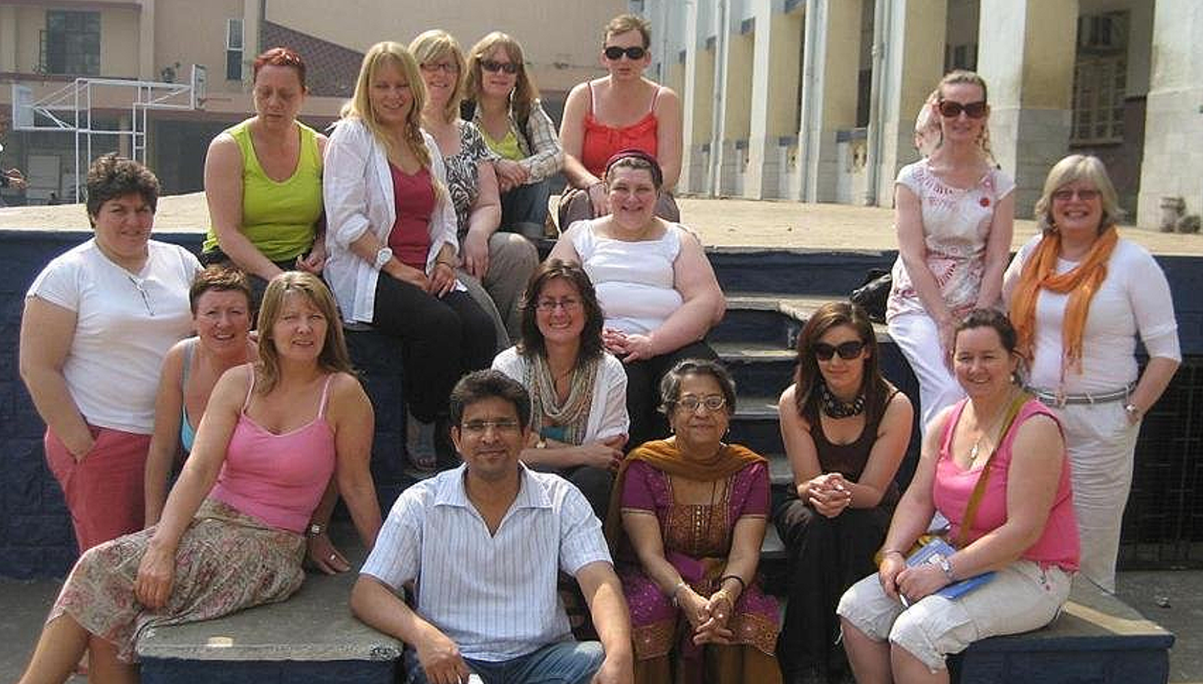
In January 2011, 13 women paused their lives in Glasgow and travelled to India to explore the aspirations, ideology and entrepreneurial vision of women's Self-Help Groups. This journey brought together women from diverse backgrounds but with shared experiences of economic struggle. In the villages in Gujarat and slums of Mumbai, they found fellow women, ordinary in their appearance but powerhouses of a kind.
Organised in collectives called Self-Help Groups (SHGs), these Indian women had become changemakers and entrepreneurs in the face of grinding poverty. Through pooling their small savings, supporting each other, and building businesses together, their lives, families, communities and local economies had transformed dramatically. The women from Scotland witnessed a movement of over 10 million small groups making big changes – creating financial independence, building confidence, and challenging social norms.
Inspired and transformed, on their return, the Glaswegians couldn't hold back. They were determined to adapt what they had learned to the Scottish context. The first ever Self-Reliant Group (SRG) in the UK began in the Provanmill community of Glasgow in March 2011, with women coming together to save small amounts, support each other, and explore entrepreneurial ideas.
From this humble beginning, WEvolution was born – a movement dedicated to supporting Self-Reliant Groups across Scotland and beyond. Founded by Noel Mathias, who had organised the initial India trip, WEvolution established itself as a charity committed to fostering the growth of SRGs, providing training, mentorship, and spaces for groups to thrive.
Learning to Scale: The Partner Model
By 2017, WEvolution realised that the growth of the movement would be limited if we didn't carefully consider our scale model. We needed to move beyond direct delivery if we were to truly spread the model's impact. After a rigorous development process with the International Centre for Social Franchising, we determined that scaling through partners was the best approach – supporting organisations that shared our values to establish and nurture their own Small Powerful Groups within their communities.
This partnership model has proved remarkably successful. Purple Shoots in Wales exemplifies this approach, running various groups that support community development using the SPG methodology. Similarly, WeMove in Rotterdam has embraced the model, demonstrating its adaptability across different cultural contexts. The key was finding determined partners and supporting them until they could sustain themselves as equals in the movement – not as franchisees, but as fellow practitioners of a shared approach.
Movement Built on Learning
From Provanmill to the Lilias Centre, from Glasgow to Wales and Rotterdam, from physical spaces to digital platforms – the story of Small Powerful Groups has been one of constant learning and evolution. We've never been an organisation stuck in our ways. Instead, we've listened, adapted, and pivoted to see how we could have the most impact.
The model has proved to be remarkably versatile. Whether it's making the digital shift, working across various geographies in the UK, or being trialled in a women's prison in Scotland, Small Powerful Groups offer something that is in short supply these days: hope. Hope obtained by working together, reframing past beliefs and picking up some basic skills that can light a wee spark in one's life.
Since then, the story of Self-Reliant Groups, now called Small Powerful Groups, has continued to unfold and capture the imagination of many. From crafting and catering to clothing and community services, these small, powerful groups have demonstrated that when people come together with purpose and mutual support, transformation is possible anywhere. Even in the digital realm. Even behind prison walls.
Today, the movement spans across the UK and beyond, with hundreds of people finding new pathways to economic empowerment, friendship, and dignity through their involvement in this community.
The Digital Shift: Reaching Beyond Walls
Then came COVID-19, and like everyone, we had to adapt. But rather than simply waiting out the pandemic, WEvolution made a strategic decision that would reshape the organisation. We scaled back our physical infrastructure and pivoted to a hybrid approach that married in-person events with a digital community.
This wasn’t just about survival – it was about learning and evolution. The digital shift opened possibilities we hadn’t fully considered before. Suddenly, we could reach women outside the central belt of Scotland who had never had access to our support. We could connect with isolated women who might never venture beyond their own four walls. The digital community became a lifeline, and it remains one of the core assets maintained by the Leadership Collective since WEvolution’s closure.
As part of this evolution, we also refreshed the language we used to describe our groups. What began as Self-Reliant Groups (SRGs) grew into what we now call Small, Powerful Groups. The new name better reflects the agency, strength and entrepreneurial energy at the heart of every group, and it aligns with our identity as a people-powered movement rather than a charitable programme. It also resonates more clearly with the women we walk alongside and is easier for new audiences to understand – especially in digital spaces where clarity and immediacy matter.
Testing the Model's Versatility: Working in Prisons
One of the most significant tests of the model's versatility came through our work with women in the criminal justice system. In partnership with researchers from the University of Strathclyde, we delivered an eight-week entrepreneurship programme at Scotland's Lilias Centre – the UK's first community custodial unit for women.
The programme brought together women facing release within one month to four years, many carrying the weight of criminal convictions that they feared would limit their futures. What unfolded was transformative. The women quickly felt part of a community, building support groups and friendships. They experienced feelings of empowerment and grew in confidence directly due to their participation. They learned new transferable skills and re-learned existing skills that could develop their careers. Perhaps most significantly, the possibility of starting their own business became a career they had never realistically explored before.
One woman, who had been imprisoned for 13 years, said: "I can honestly say, I can go out with a good head on my shoulders because of this programme." The women became very focused on 'communitising wealth' – generating benefits and competencies not only for themselves but also to transfer to their children, grandchildren and the community.
The prison work proved that Small Powerful Groups, with their core features of shared leadership, savings and creating, could work in even the most challenging contexts. It wasn't without its difficulties – building trust took longer in the custodial environment, and there were contextual restrictions around technology and security. But the outcomes demonstrated something profound: that hope, obtained by working together, reframing past beliefs and picking up some basic skills, can light a wee spark in anyone's life, regardless of their circumstances.
Our Approach
The evolution of our approach and methodology.
Our Impact
Case studies and Social Return on Investment.
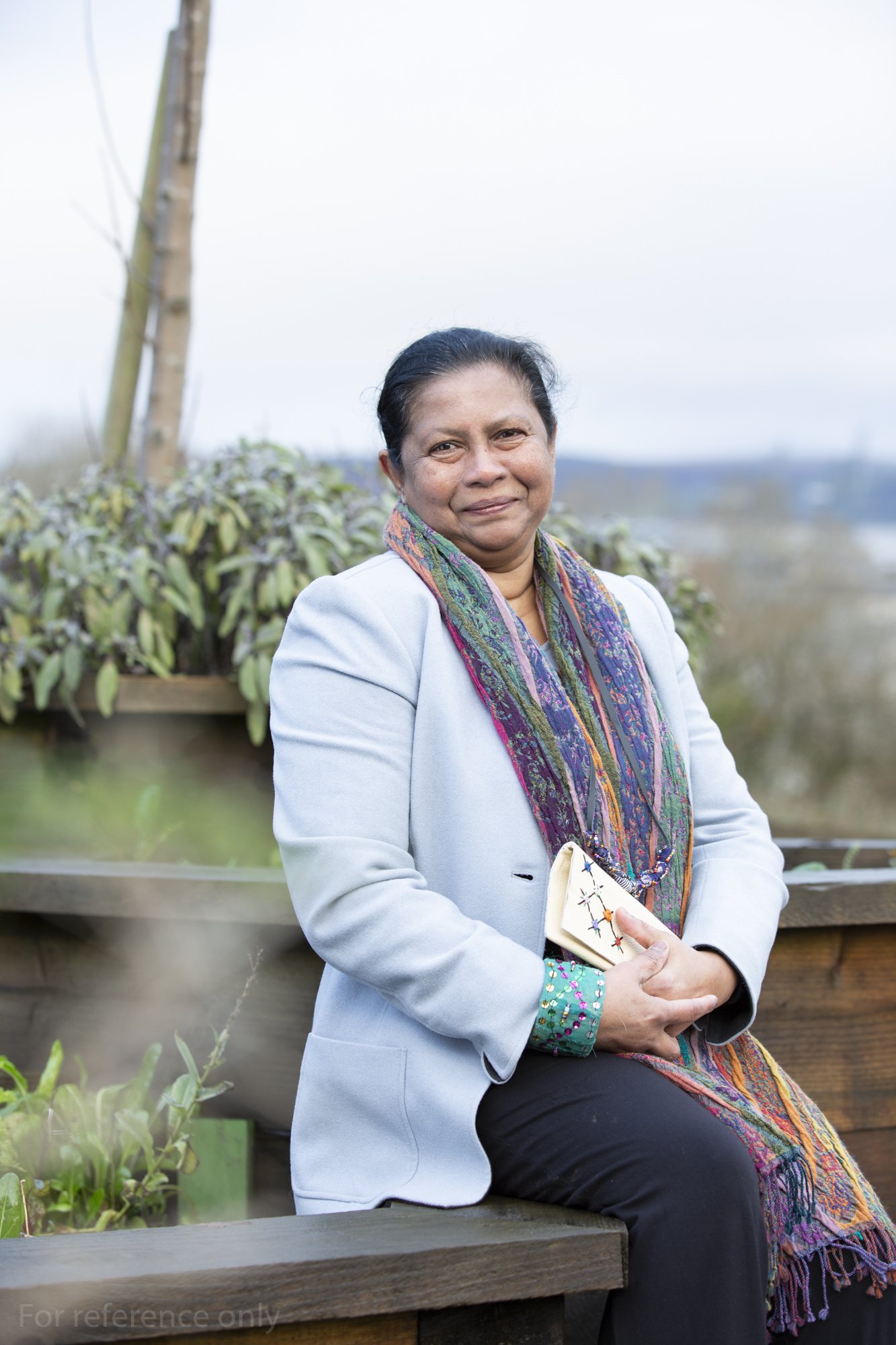

The experiences of WEvolution team in facilitating and supporting Small, Powerful Groups has been vital for us to understand what happens next, what the challenges and issues are, and how we can enhance our support to the Small, Powerful Groups we work alongside. Especially when we first started and only had two groups - we would use examples and stories from WEvo team and Small Powerful Groups in Scotland to add richness, and colour from lived experience of members.